
Trump’s Economic Policies for Small Businesses 2026: Complete Guide for Growth & Survival
Trump’s economic policies for small businesses in 2026 are shaping the financial reality for entrepreneurs across the United States. Whether you run an online store, a local service, or a manufacturing startup, these policies directly influence your costs, pricing, hiring decisions, and long-term growth strategy.
From tariffs on imports to tax cuts and deregulation, the impact is mixed—some businesses benefit from increased cash flow, while others struggle with rising expenses. Understanding how Trump’s economic policies for small businesses in 2026 work is essential if you want to stay competitive.
In this guide, you’ll get a clear, practical breakdown along with actionable strategies to help your business adapt and grow.
Understanding Trump’s Economic Policies for Small Businesses 2026
At the core of Trump’s economic policies for small businesses in 2026 are three major pillars:
- Lower business taxes
- Higher tariffs on imports
- Reduced government regulations
These policies aim to boost domestic production and economic independence. However, their real impact depends heavily on your industry and business model.
How Trump’s Economic Policies for Small Businesses in 2026 Affect Tariffs
Rising Costs for Imported Goods
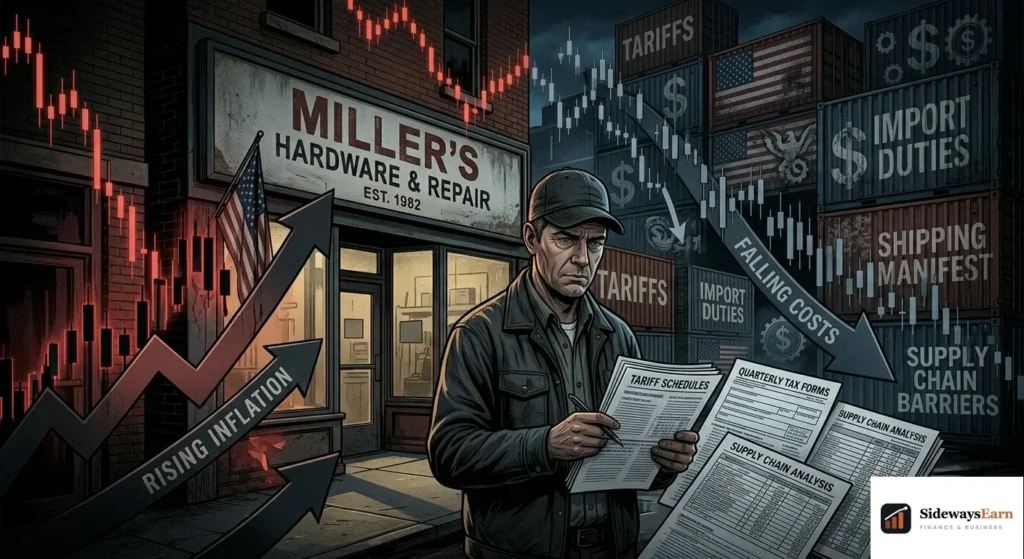
A key part of Trump’s economic policies for small businesses in 2026 is the use of tariffs. These taxes on imported goods can significantly increase operating costs.
Example:
A small e-commerce store importing products from Asia may face the following:
- Higher product costs
- Reduced profit margins
- Pressure to increase prices
Industries Most Affected
- e-commerce and retail
- Manufacturing using imported materials
- Construction and raw materials
- Automotive parts businesses
Profit Impact
Tariffs create a chain reaction:
- Suppliers increase prices
- Shipping costs rise
- Pricing flexibility decreases
This makes it harder for small businesses to compete with larger corporations.
Trump Tax Cuts and Small Businesses 2026
The Benefits of Tax Relief
One of the biggest advantages of Trump’s economic policies for small businesses in 2026 is tax reduction.
Lower taxes can:
- Increase net profits
- Improve cash flow
- Enable reinvestment
- Support hiring and expansion
Who Benefits Most
- Freelancers and consultants
- Service-based businesses
- Local businesses with minimal imports
The Hidden Challenge
While tax cuts help, they may not fully offset the following:
- Increased costs from tariffs
- Supply chain disruptions
- Changing consumer spending
So, while helpful, tax benefits alone aren’t enough.
Small Business Economy USA 2026 Under Trump’s Policies
The broader economy under Trump’s economic policies for small businesses in 2026 presents both opportunities and risks.
Positive Trends
- Growth in domestic manufacturing
- Job creation in local markets
- Simplified regulations
Challenges
- Inflation due to tariffs
- Supply chain instability
- Uneven industry benefits
Businesses that rely heavily on imports often face more pressure than locally focused companies.
How Trump’s Economic Policies for Small Businesses in 2026 Influence Consumer Behavior
Consumer behavior is directly impacted by economic policy changes:
- Higher prices → Reduced spending
- Tax savings → Increased purchasing power
- Economic uncertainty → More cautious buyers
What This Means for Businesses
To succeed under Trump’s economic policies for small businesses in 2026, business owners must:
- Adjust pricing strategies
- Focus on value-driven offerings
- Build stronger customer relationships
Practical Strategies to Succeed in 2026
Adapting to Trump’s economic policies for small businesses in 2026 requires proactive planning.
1. Diversify Your Supply Chain
- Source from multiple countries
- Explore domestic suppliers
- Reduce dependency on imports
2. Optimize Pricing Strategy
- Use bundled offers
- Introduce tiered pricing
- Focus on perceived value
3. Reinvest Tax Savings
Use extra cash flow for:
- Marketing campaigns
- Technology upgrades
- Team development
4. Improve Efficiency
Use tools like:
- Accounting software for cost tracking
- eCommerce platforms for scalability
- Team collaboration tools
👉 “How to Save $10,000 in One Year” for financial discipline strategies.
👉 “How to Make Money While You Sleep” to support passive income growth.
5. Build Customer Loyalty
- Offer loyalty programs
- Focus on customer experience
- Strengthen brand identity
Real-World Example
Consider a small apparel brand operating under Trump’s economic policies for small businesses in 2026:
- Imports fabrics → faces higher tariffs
- Receives tax cuts → gains extra cash
Result:
If the business shifts to local suppliers and adjusts pricing smartly, it can maintain profitability and even grow.
External Resources for Deeper Insights
For accurate data and support, refer to the U.S. Small Business Administration, which provides valuable reports and guidance for small business owners navigating economic policy changes.
Suggested Image (SEO Optimization)
Alt Text:
Trump’s economic policies for small businesses: 2026 impact on tariffs and tax cuts illustration
FAQs
1. How do Trump’s economic policies for small businesses in 2026 affect profitability?
They create mixed outcomes—tax cuts boost profits, while tariffs increase costs.
2. Are tariffs always harmful?
No. Businesses competing with imports may benefit, but import-dependent businesses face challenges.
3. Do tax cuts guarantee growth?
No. Growth depends on demand, cost control, and strategy.
4. Which businesses benefit the most?
Local service providers and domestic manufacturers benefit the most.
5. How can businesses stay competitive?
By diversifying suppliers, improving efficiency, and focusing on customer value.


Conclusion
Trump’s economic policies for small businesses in 2026 create a complex environment filled with both risks and opportunities. There is no one-size-fits-all outcome—success depends on how well businesses adapt.
Tax cuts provide breathing room, but tariffs and market shifts demand smarter decision-making. The most successful businesses will be those that stay flexible, control costs, and continuously refine their strategies.
If you focus on resilience, efficiency, and customer satisfaction, your business won’t just survive—you’ll position yourself for long-term growth regardless of policy changes.